Vision of the Prophet – Kahlil Gibran – Samir Atallah
$ 99.80
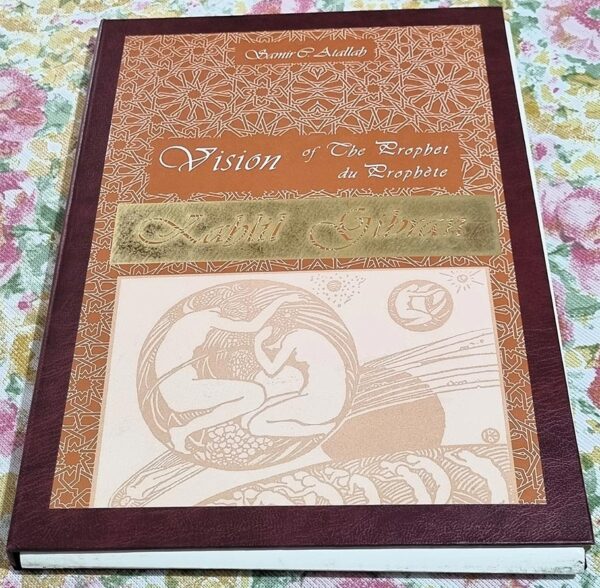
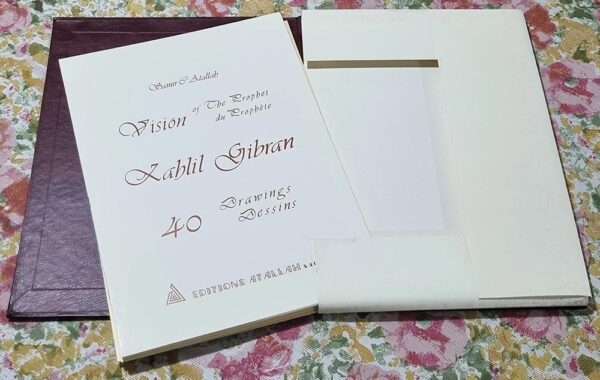
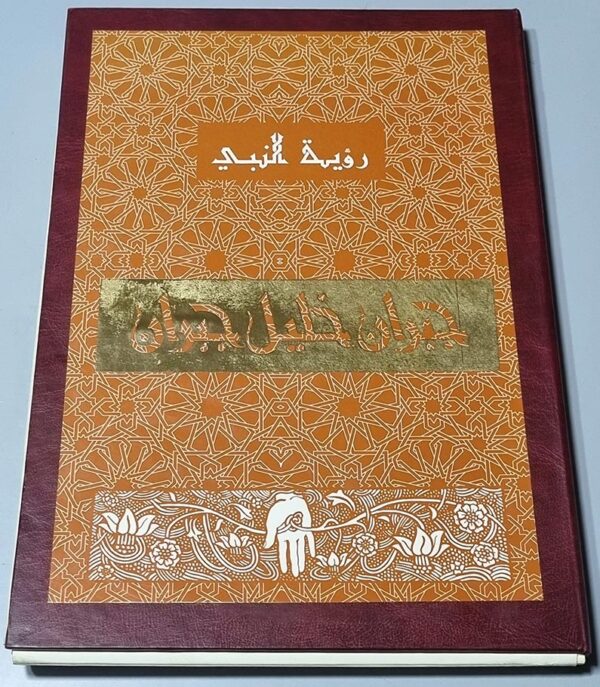
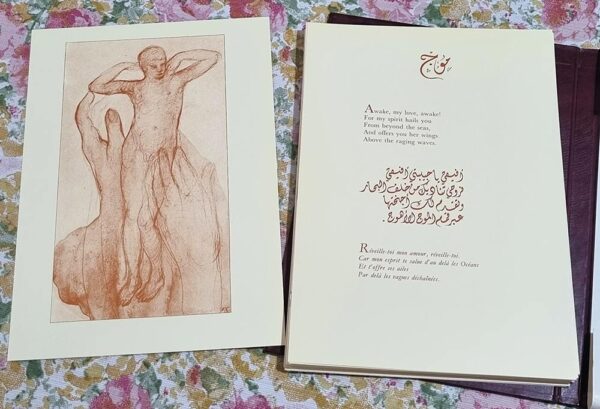
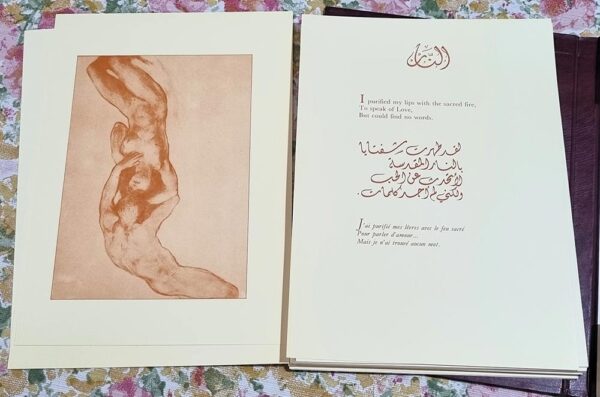
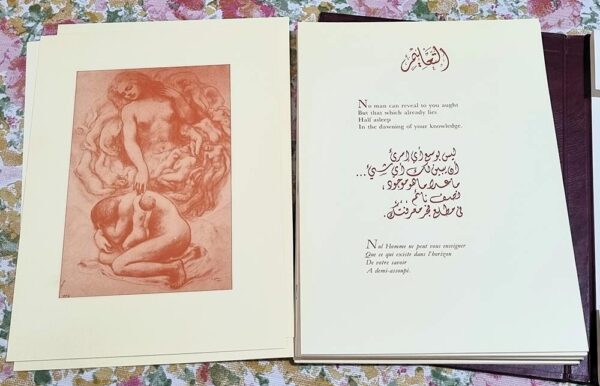
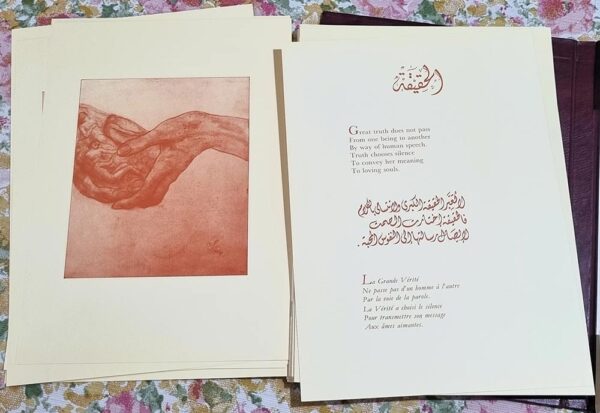
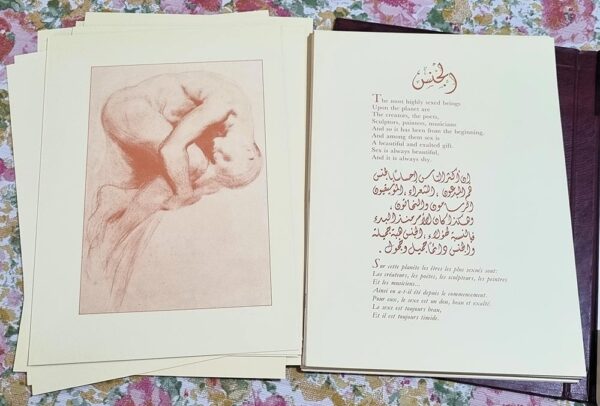
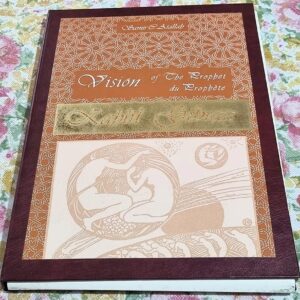
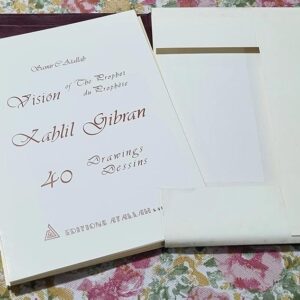
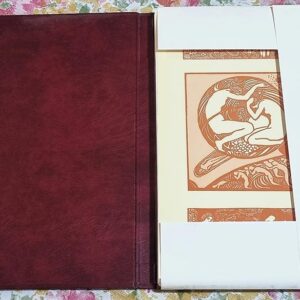
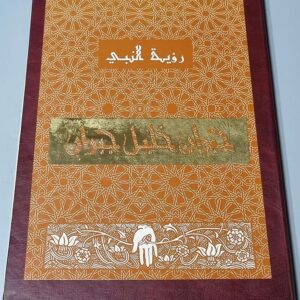
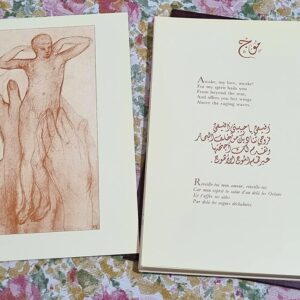
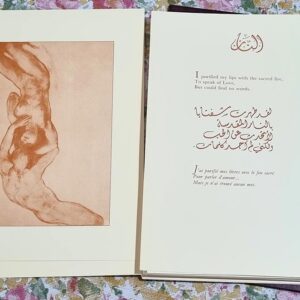
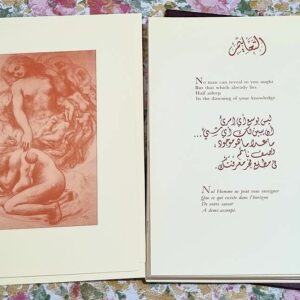
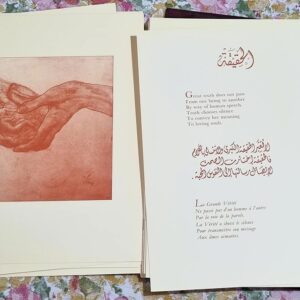
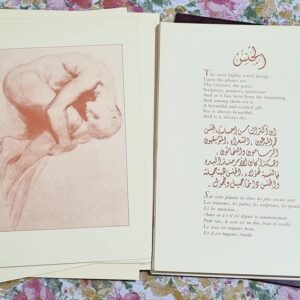
Vision of the Prophet – Vision du Prophète – Kahlil Gibran – Samir Atallah with 40 drawings – رؤية النبي – جبران خليل جبران
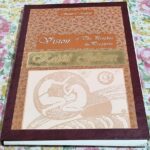

100% Made in Lebanon - صنع في لبنان
- Description
- Shipping & Return
Description
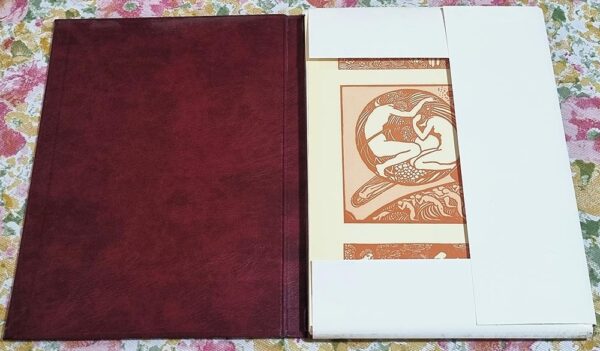
LebanonPostcard presents Vision of the Prophet – Vision du Prophète – Kahlil Gibran – Samir Atallah with 40 drawings / Dessins – Editions Atallah رؤية النبي – جبران خليل جبران
In English, French and Arabic – Hardcover coffret book with paper plates, 35×24.5 cm
Kahlil Gibran (Gibran changed the correct spelling of «Khalil» into «Kahlil» at the instigation of his teacher of English at the Boston School he attended between 1895 and 1897.) was born on January 6, 1883 in a mountain village nestled below the Cedars of the Lord and the song of songs, Bisharri.
The son of a peasant, Gibran had his roots anchored deep in the tough but fertile soil of his native village. His mother, the daughter of the village priest, was a gentle and affectionate woman. Gibran’s boundless love for her once prompted him to declare to his patroness, Mary Haskell: “Most religions speak of God in the Masculine. For me, He is just as much of the feminine gender.”
Kamileh Rahmi, Gibran’s mother, decided in 1884 to emigrate with her four children to the United States. Her purpose was twofold: to escape from her husband’s tyranny and to secure for her family a better future. Gibran was then 11 years old.
Settled in Boston’s Chinatown, the whole family-his mother, his half-brother and his sisters-went to work in order to pay for Gibran’s education. When, in 1897, he expressed the wish to return to Lebanon to continue his studies in Arabic, all contributed to the price of his ticket.
In Beirut, as a student at al-Hikmah College, Gibran plunged himself wholeheartedly into the study of Arabic literature. It was during this period that his talents as an artist began to emerge. At the age of sixteen, he executed an entire series of line portraits of the great Arab writers of the Middle ages and the Pre-Islamic period, as he imagined them.
A few years later, he returned to Boston but left again for Lebanon in 1902, this time to accompany a wealthy American family whom he served as guide and interpreter. Back in the United States in 1903, he was hired by the famous photographer, Fred Holland Day, as a model. Gibran enjoyed disguises and can be seen in some of these photographs dressed as a woman.
Day was to organize, in his own studio the first exhibition of Gibran’s drawings in Januany 1904. It was during this showing that Gibran met Mary Haskell, the headmistress of a girls’ school, who invited him to exhibit his work at her school, the Haskell-Dean School for Girls.
Mary Haskell was the woman who would make of Gibran a great artist and help him to find in the English language a medium of direct expression.
Gibran studied for two years at the Académie Julien and the Ecole de Beaux Arts in Paris. It was there that he met Auguste Rodin. Although their meeting lasted only a few moments, he was very much impressed by Rodin. The sculptor later commented on Gibran’s drawings, collected in an exhibition along with works by Debussy and Rostand, in these terms: “His drawings and poems are so intimately linked that I think of him as a modern-day William Blake.» In fact at that time, Gibran became especially interested in the works of William Blake and Friedrich Nietzsche, however Nietzsche’s influence, unlike that of Blake, was short-lived.
Among the works by Rodin that most impressed Gibran was «The Hand of God». Upon seeing it, the young artist cried out: «Was it God who created man or man who created God?»
By 1911, Gibran was able to support himself on his art work. Back in Boston in 1912, he again took up the pen to write. At the same time, he began to prepare for the exhibition he was to organize at New York’s Montross Galleries, in 1914. He exhibited again in 1917 at the Knoedler Galleries in New York and at the Doll and Richards in Boston.
His first and only bound collection of drawings, «Twenty Drawings », was published by Knopf in 1919 with a preface by Alice Raphaël.
Gibran died in New York on April 10th 1931, following a long bout with tuberculosis, the same illness that had earlier struck down his entire family. He left behind him eight books in Arabic and eight in English.
His Arabic Works:
Music (1905)
Nymphs of the Valley (1906)
Spirits Rebellious (1908)
The Broken Wings (1912)
A Tear and a Smile (1914)
The Processions (1919)
The Tempests (1920)
Beautiful and Rare Sayings (1923)
His English Works:
The Madman (1918)
The Forerunner (1920)
The Prophet (1923)
Sand and Foam (1926)
Jesus, the Son of Man (1928)
The Earth Gods (1931)
The Wanderer (1932)
The Garden of the Prophet (1933)
His Art Works: Twenty Drawings (1919)
Gibran’s body was returned to Lebanon, at his request, and lies today in the Valley of Khadisha, in his native Bisharri.
Gibran’s thought does not in itself constitute a doctrine. He was a symbolist who drew what he pleased from all currents: Hinduism, Sufism, Islam, Buddhism and Christianity. It is the Druze doctrine, widespread in Lebanon, that had the strongest impact on his personality. For this “mal aimé” liked to believe that he would one day be reborn into a world better than the one he had known. Gibran believed in reincarnation, in his words the “continuity of life,” and equated his thought with Absolute Reality. Yet neither Blake nor the mystics believed in reincarnation.
LebanonPostcard will be responsible for sending the album you order, through a fast courier with a tracking number, guaranteeing reception of the package. The item may take between two and five days to arrive, according to the country it is sent to.
a. View or Modify What is in Your Shopping Cart.
When in the Shopping Cart area of the site you can view or modify what is in your shopping cart at any time by clicking on the Add More Items/Refresh Totals button along the bottom of your screen.
b. Checking Out and pay for your purchases online.
When you have finished viewing and wish to end your shopping and pay for the items you have selected, click on the Pay & Finish button at the bottom of your screen.
You will be led through a series of secure ordering procedures and will be asked to fill in personal, shipping and payment option information. When this is completed, you will press the Submit Secure Checkout button and your order will be transmitted to LebanonPostcard for fulfillment.
Absolutely not! Right up until the point why you are asked to review the order information you have given us and if it is correct to click on the final Submit Secure Order button, you can abort the order.
If you don't press the Submit Secure Order button then no order information is transmitted to us.
a. Payment by Credit Card
We accept American Express, MasterCard, Visa, Discover, PayPal... etc... for online payments through 2CheckOut.com. Also, arrangements can be made for bank draft and certified check payments by regular post.
b. Payment by Bank Draft and Certified Check
If you would prefer to pay for your purchases by mail, then you have to contact us first so we can give you our account information.
c. We accept as well payment through WesternUnion, RIA, OMT, BOB Finance, Whish Money.
All prices include shipping and handling. LebanonPostcard will be responsible for sending the packages you order, at your charge, through the service D.H.L. / E.M.S. with tracking number code guaranteeing reception of the package.
We ship as soon as possible, but within maximum 4 days after the order is received.
Credit cards are not charged until we actually ship the items. The items may take between one and six days to arrive, according to the country they are sent to.
Packages are sent with track code to guarantee reception, and delay is rare. In the event of non-delivery or delay, nothing can be done for 7 days. At the end of this period, on our being informed, a demand will be made for the package to be traced. If 14 days after the first dispatch there is still no delivery, a second package will be sent free.
Packages inside Lebanon are sent registered through LibanPost to guarantee reception, and delay or non-delivery is rare. In the event of non-delivery, nothing can be done for 6 days. At the end of this period, on our being informed, a demand will be made to LibanPost for the package to be traced. If 12 days after the first dispatch there is still no delivery, a second package will be sent free.
We ship anywhere in the world. Zones and countries we ship to
Yes. You can cancel you order when you receive an email from us confirming your order, you can reply by canceling it.