Animals of Lebanon in Antiquity from A to Z
$ 37.00
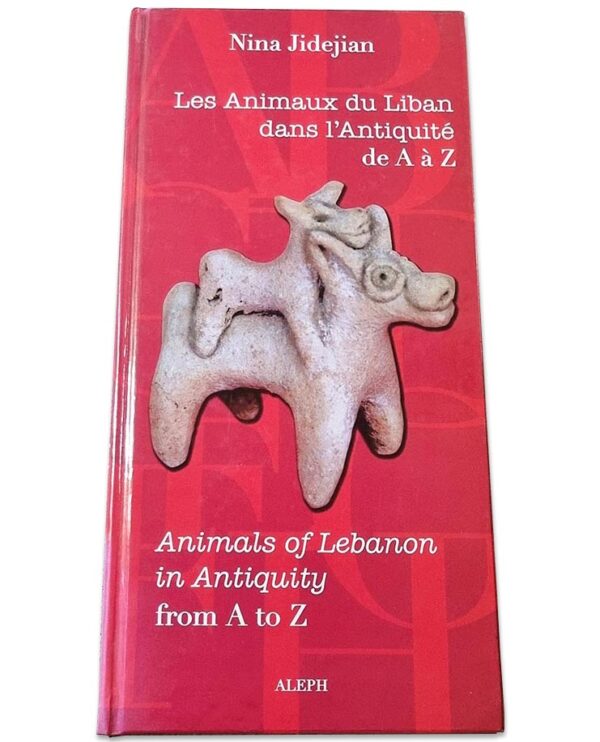
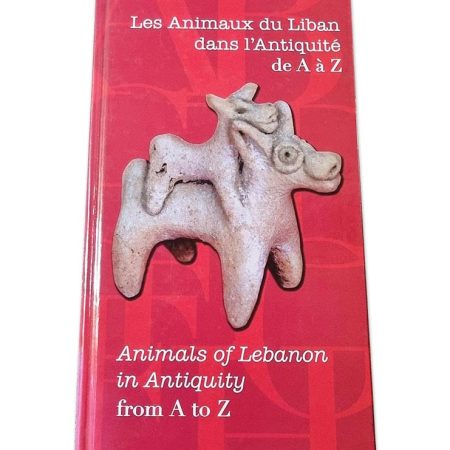
Nina Jidejian – Les Animaux du Liban dans l’Antiquité – Animals of Lebanon in Antiquity


100% Made in Lebanon - صنع في لبنان
- Description
- Shipping & Return
Description
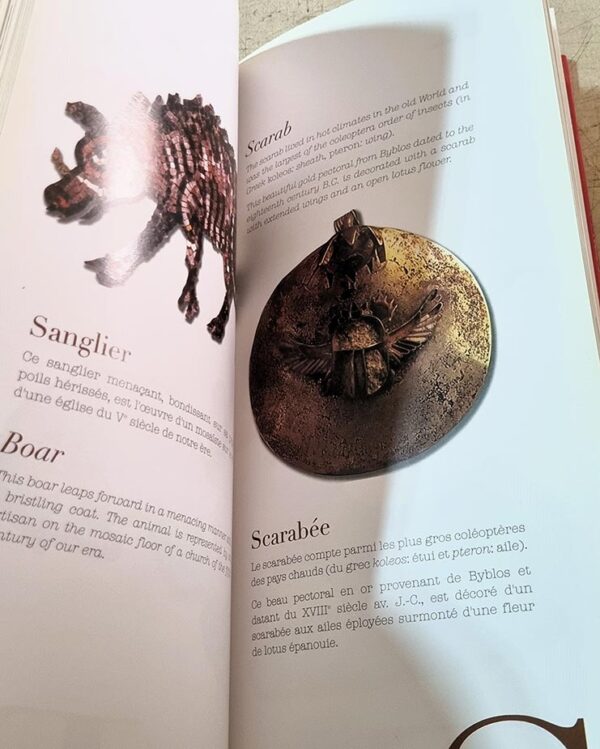
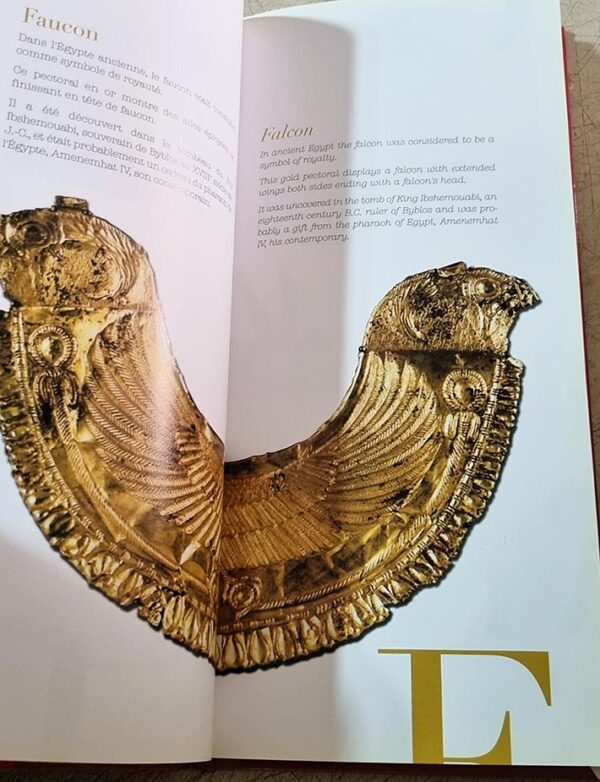
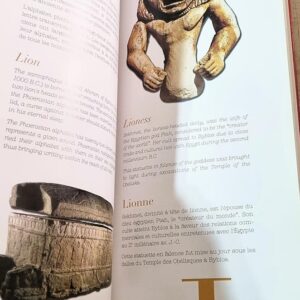
LebanonPostcard presents the rare book Nina Jidejian – Les Animaux du Liban dans l’Antiquité de A à Z – Animals of Lebanon in Antiquity from A to Z – Aleph – Hardcover book, 32×16 cm, 76 pages (Used but still in good condition)
Prologue (Extract)
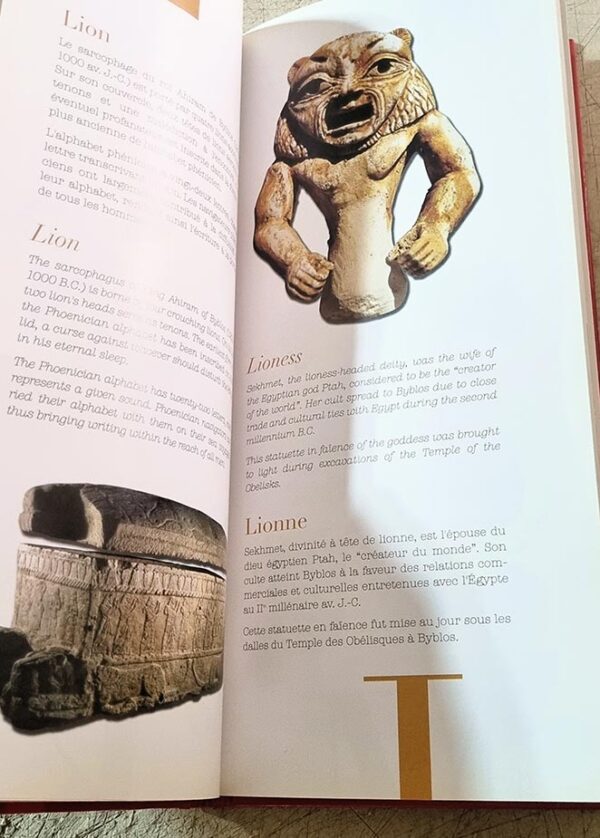
There is abundant archaeological evidence proving that early Man in Lebanon lived side by side with animals of all sorts: wild, domesticated or venerated as gods.
Several millennia ago Man abandoned his tree shelter to seek refuge in a cave. He learned to plant and harvest grain instead of searching for his sustenance here and there. He thus discovered Agriculture, a major step in the history of mankind.
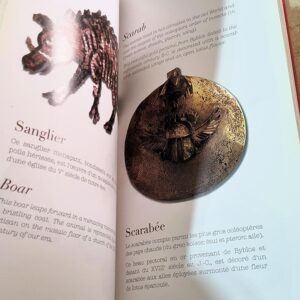
He was also able to domesticate the wild animals that abounded in the forest: the boar, the goat, the bull, the dog.
Then Man began to believe in an all-powerful force that controlled him and his environment and he began to believe in a life after death.
Five thousand five hundred years ago, during the Chalcolithic Age, a young man was buried in a funerary jar in Byblos. Above him was laid a smaller jar that contained the remains of his dog in order to accompany him in the after-life.
We thus see that Man in Lebanon understood from the earliest times that animals were essential for his well-being and his survival.
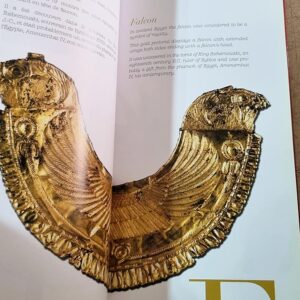
Strong religious and commercial ties developed with Egypt due to the cedar trade. Sacred animal gods made their appearance in Lebanon: the bull, the hippopotamus, the lion, the cat. Local artisans in their workshops made representations of these animals in terra cotta, faïence, ivory, bronze.
Later on the mosaicists used animals, wild or domesticated and floral designs to decorate the floors in churches and in the residences of the… …
Prologue (Extrait)
D’abondantes preuves archéologiques en font foi: sauvages, domestiques ou vénérés comme des dieux, les animaux de toutes espèces accompagnaient la vie des premiers habitants du Liban.
Il y a de cela plusieurs millénaires, l’Homme abandonna l’arbre, son premier refuge, et trouva un nouvel abri dans des cavernes. Il apprit à vivre de récoltes plutôt que de cueillette. Ainsi naquit l’agriculture, étape majeure de l’histoire de l’humanité.
Il parvint à domestiquer les animaux sauvages qui peuplaient la forêt les sangliers, les chèvres, les bœufs, les chiens…
Puis l’Homme se mit à croire en une force surnaturelle et toute puissante qui devait, à ses yeux, régir sa vie et son environnement. Il commença alors à croire en une existence dans l’au-delà.
Il y a cinq mille cinq cents ans, à l’âge chalcolithique, un jeune homme fut enterré dans une jarre funéraire, à Byblos. Une autre jarre plus petite était posée sur lui. Elle contenait les restes de son chien qui, ainsi, l’accompagnait dans l’au-delà.
Les premiers habitants du Liban avaient ainsi compris que les animaux étaient essentiels à leur bien-être et leur survie.
D’étroits liens – religieux et commerciaux – établis avec l’Égypte, grâce notamment au commerce du bois de cèdre, favorisèrent l’apparition d’animaux sacrés au Liban, comme le taureau, l’hippopotame, le lion, le chat…
Les artisans de l’époque façonnaient dans leurs ateliers des représentations d’animaux en terre cuite, en faïence, en ivoire ou en bronze.
LebanonPostcard will be responsible for sending the book you order, through a fast courier with a tracking number, guaranteeing reception of the package. The souvenirs may take three to five days to arrive, according to the country they are sent to.
a. View or Modify What is in Your Shopping Cart.
When in the Shopping Cart area of the site you can view or modify what is in your shopping cart at any time by clicking on the Add More Items/Refresh Totals button along the bottom of your screen.
b. Checking Out and pay for your purchases online.
When you have finished viewing and wish to end your shopping and pay for the items you have selected, click on the Pay & Finish button at the bottom of your screen.
You will be led through a series of secure ordering procedures and will be asked to fill in personal, shipping and payment option information. When this is completed, you will press the Submit Secure Checkout button and your order will be transmitted to LebanonPostcard for fulfillment.
Absolutely not! Right up until the point why you are asked to review the order information you have given us and if it is correct to click on the final Submit Secure Order button, you can abort the order.
If you don't press the Submit Secure Order button then no order information is transmitted to us.
a. Payment by Credit Card
We accept American Express, MasterCard, Visa, Discover, PayPal... etc... for online payments through 2CheckOut.com. Also, arrangements can be made for bank draft and certified check payments by regular post.
b. Payment by Bank Draft and Certified Check
If you would prefer to pay for your purchases by mail, then you have to contact us first so we can give you our account information.
c. We accept as well payment through WesternUnion, RIA, OMT, BOB Finance, Whish Money.
All prices include shipping and handling. LebanonPostcard will be responsible for sending the packages you order, at your charge, through the service D.H.L. / E.M.S. with tracking number code guaranteeing reception of the package.
We ship as soon as possible, but within maximum 4 days after the order is received.
Credit cards are not charged until we actually ship the items. The items may take between one and six days to arrive, according to the country they are sent to.
Packages are sent with track code to guarantee reception, and delay is rare. In the event of non-delivery or delay, nothing can be done for 7 days. At the end of this period, on our being informed, a demand will be made for the package to be traced. If 14 days after the first dispatch there is still no delivery, a second package will be sent free.
Packages inside Lebanon are sent registered through LibanPost to guarantee reception, and delay or non-delivery is rare. In the event of non-delivery, nothing can be done for 6 days. At the end of this period, on our being informed, a demand will be made to LibanPost for the package to be traced. If 12 days after the first dispatch there is still no delivery, a second package will be sent free.
We ship anywhere in the world. Zones and countries we ship to
Yes. You can cancel you order when you receive an email from us confirming your order, you can reply by canceling it.