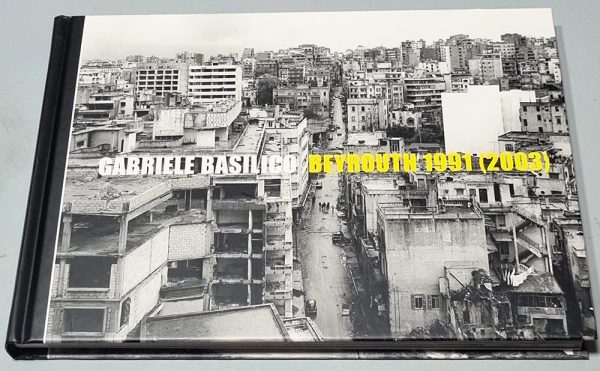
Gabriele Basilico – Beyrouth 1991 (2003)
$ 320.00
Gabriele Basilico – Beyrouth 1991 (2003) – Hardcover book, 24.5×17 cm, 175 pages – Avec des textes de / With text by Francesco Bonami, Dominique Edde.

100% Made in Lebanon - صنع في لبنان
- Description
- Shipping & Return
Description
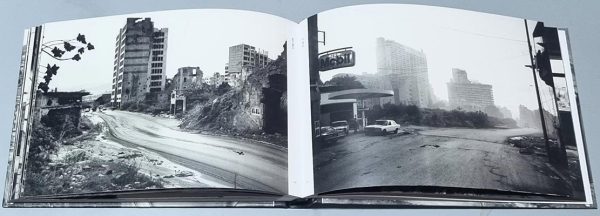
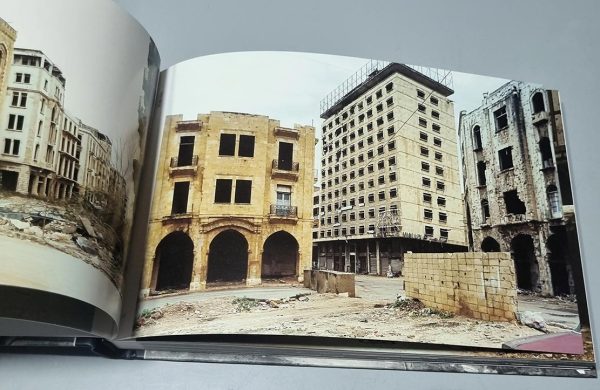
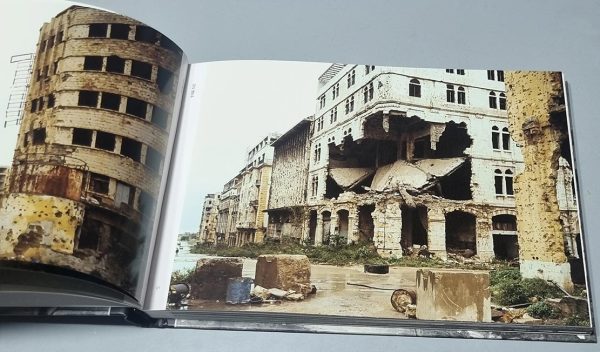
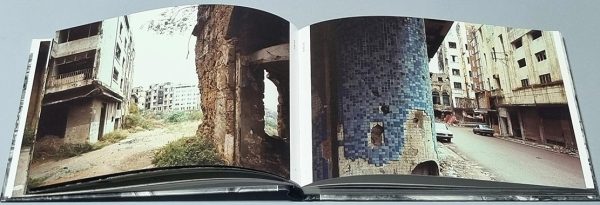
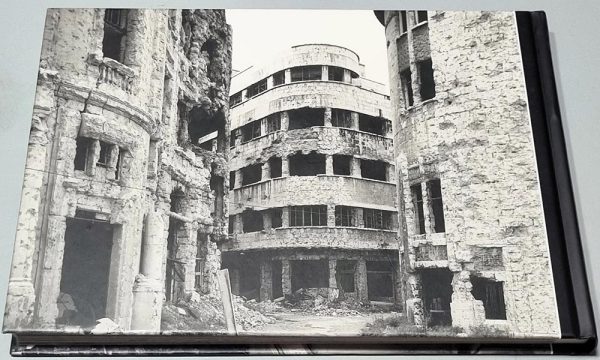
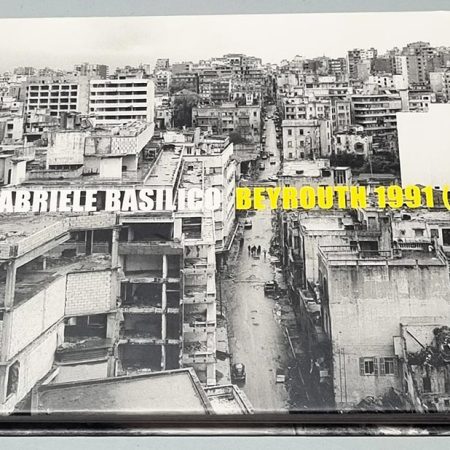
LebanonPostcard presents the rare book of Gabriele Basilico – Beyrouth 1991 (2003) – Hardcover book, 24.5×17 cm, 175 pages – Avec des textes de / With text by Francesco Bonami, Dominique Edde – Solidere
“Parce que Beyrouth n’a jamais été seulement une ville. Elle a été, avant tout, une idée, une idée qui signifiait quelque chose non seulement pour les Libanais mais pour le monde arabe tout entier. Tandis qu’aujourd’hui le seul nom de “Beyrouth” évoque des images infernales, il a représenté pendant des années, peut-être à tort, quelque chose de différent, quelque chose de presque aimable : l’idée de coexistence et l’esprit de tolérance, l’idée que des communautés religieuses différentes – Chiites, Sunnites, Chrétiens, Druzes – pouvaient vivre ensemble et même prospérer dans une même ville et dans un même pays, sans devoir abandonner leurs identités individuelles.”
Thomas L. Friedman, From Beirut to Jerusalem, 1989.
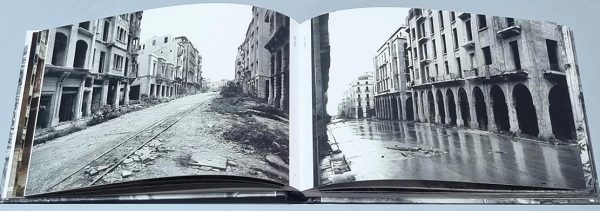
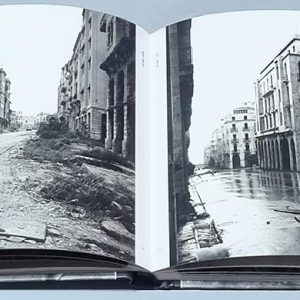
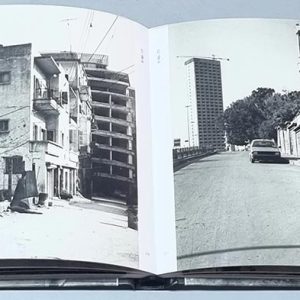
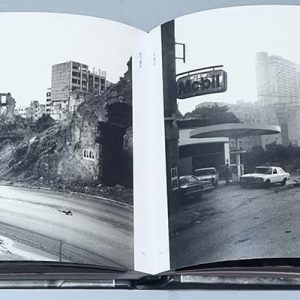
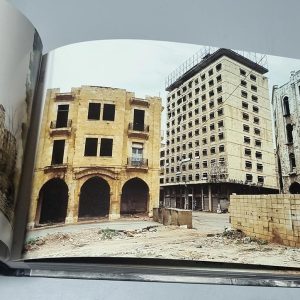
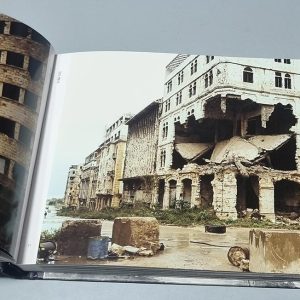
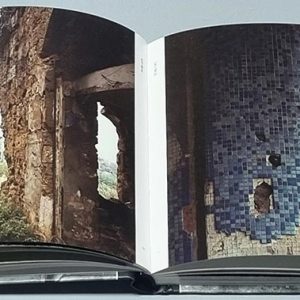
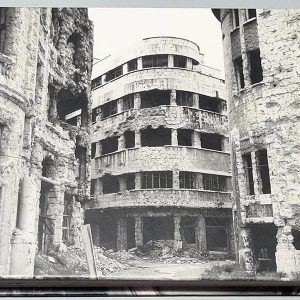
En 1991, un an après la fin d’une guerre qui a duré 15 ans, le photographe italien Gabriele Basilico fut invité par l’écrivain Dominique Eddé à participer à un projet qui se proposait de documenter le centre-ville de Beyrouth, en enregistrant ce qui restait le long de l’infâme « Ligne Verte ».
Même si le résultat maintient un regard objectif et analytique, il a un sens ambivalent et déconcertant. Il s’agit d’un document sur un passé horrible et en même temps du portrait sombre d’un futur imprévisible.
Les photos de Basilico sont plus une interrogation qu’une déclaration.
Basilico regarde Beyrouth comme s’il regardait n’importe quelle autre ville transformée d’une façon mystérieuse, plus par la maladie que par la guerre, peut-être par la dégradation sociale, peut-être par la spéculation immobilière sauvage et inconsidérée.
Les photos de Beyrouth ne sont pas un jugement sur la guerre, au contraire, elles sont une réflexion sur ce qui reste d’une ville quand, une fois la guerre terminée, la vie reprend son cours.
L’idée de ville reste intacte même si ses structures politiques et sociales ont été attaquées, et Basilico regarde cet organisme comme un médecin qui observe un patient ayant survécu à une maladie mortelle. Il observe la destruction et en même temps il célèbre les perspectives incroyables et les possibilités que la survivance peut produire.
Beyrouth n’a pas survécu seulement à une guerre, mais à des centaines de guerres : chaque fenêtre sombre de chaque bâtiment représente un des mille symptômes qui ont fait de cette ville un cas désespéré, un patient incurable. Cependant elle a réussi à survivre.
Maintenant c’est à nous de décider si nous sommes devant des ruines semblables à celles du temple de Bacchus à Baalbek, ou devant des cicatrices brutales laissées par la folie de l’homme. Nous pensons toujours que les sites archéologiques que nous visitons, sont des témoignages de grandes cultures et civilisations et non pas le résultat de dévastations barbares. Et pourtant, le Parthénon fut, dit-on, incendié par les Turcs au XVIIe siècle : son état actuel n’est pas dû à l’érosion du temps ou de l’histoire, mais à l’ordre d’un commandant expéditif.
Au Musée archéologique de Florence, une foule de touristes fait la queue pour voir un merveilleux vase grec brisé. Cet objet fantastique a dû être recollé, non pas parce qu’il a été trouvé en morceaux sous terre, mais parce qu’au début du siècle un garde distrait le fit tomber.
Il s’agit d’acquérir un détachement suffisant qui nous permette de juger la dévastation comme histoire et pas simplement comme folie humaine. En regardant les photos de Beyrouth, où les bâtiments se tiennent debout avec la même dignité que le Colisée dans les rues encombrées de Rome, nous devons penser de quelle façon ces images seront utilisées et comment elles pourront influencer l’histoire future de la ville, soit en termes de développement architectonique, soit comme points de repère d’un temps qui court le risque d’être oublié.
Les nouvelles méthodologies de construction prennent en considération la structure urbanistique et la portée conceptuelle de toutes les villes du monde pour éliminer en quelques années la dévastation, mais en même temps elles effacent des expériences culturelles profondes qui appartiennent aux monuments vides.
Le bruit du bombardement a cessé; aujourd’hui, Beyrouth est assourdie par le grincement des grues et les vibrations des marteaux-piqueurs. Les photographies de Gabriele Basilico ne sont pas seulement un moment fondamental dans la vie de cette ville, elles sont aussi des visions symboliques silencieuses, derrière les fenêtres aveugles des bâtiments et des immeubles.
Comme Thomas Friedman poursuivrait : “La véritable histoire, souvent, ne se trouve pas dans le bruit mais dans le silence et cela nous échappe souvent.”
Francesco Bonami
“Because Beirut was never just a city. It was an idea, an idea that meant something not only to the Lebanese but to the entire Arab World. While today, just the word ‘Beirut’ evokes images of hell on earth, for years Beirut represented – maybe dishonestly – something quite different, something almost gentle: the idea of coexistence and the spirit of tolerance, the idea that diverse religious communities -Shiites, Sunnis, Christians and Druses – could live together, and even thrive, in one city and one country without having to abandon altogether their individual identities.”
Thomas L. Friedman, From Beirut to Jerusalem, 1989.
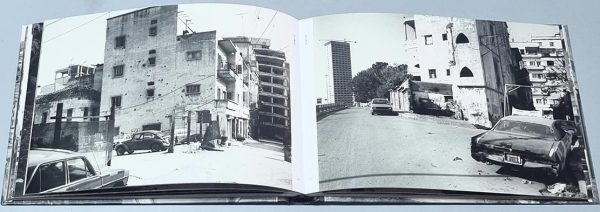
In 1991, one year after the end of a war that lasted fifteen years, the Italian photographer Gabriele Basilico was invited by the writer Dominique Eddé to take part in a project aiming at documenting the central part of Beirut, recording with the camera what was left along the infamous and symbolic “Green Line”.
The result, while maintaining an objective and analytical edge, has an ambivalent and disconcerting feeling. It is a document of a horrendous past and at the same time a blueprint for an unpredictable future.
Basilico’s photographs are much more of a question than a statement.
Basilico looks at Beirut as if he were looking at any other city transformed in a more subtle way by a different disease than war, perhaps by social degradation, perhaps by wild and unconsidered real estate speculation.
The Beirut photographs are not a judgment on war but a reflection on what a city is left with once war eventually ends and life resumes its course.
The idea of the city remains intact even if its political and social structures have been attacked and Basilico looks at the system as a doctor would observe a patient who survived a terminal sickness. He notes the damages while celebrating the incredible possibilities and perspectives that any kind of survival can produce.
Beirut has survived not just a single war but hundreds of wars and each dark window in each building represents one of the thousands of symptoms that made this city a desperate case, an incurable patient. Yet it survived.
Now it is up to us to decide if we are witnessing ruins like the temple of Bacchus at Baalbeck, or brutal scars left by human madness. In fact we have always assumed that the archaeological sites we visit are the remains of great cultures and civilizations and not the results of ignorance and barbaric devastation. But even the Parthenon was apparently blown up by the Turks during
the seventeenth century, so its present state is not primarily due to the erosion of time and history but to the order of some hasty commander.
In the archeological museum of Florence herds of tourists stand in line to admire a beautiful but badly cracked Greek vase. This fantastic object had to be pasted together not because it was found in pieces under the ground, but because a distracted guard smashed against it at the beginning of the century.
It is a matter of creating a sufficient longing that allows us to judge devastation as history and not simply as a human folly. Looking at the photos of Beirut, where buildings stand with no less dignity than the Colosseum in Rome’s traffic jam, we have to consider how these images will be handled and how they will affect the future history of the city both in terms of architectural
development and as a reference point of a time that runs the risk of being forgotten.
New building methodologies use the urbanistic structure and conceptual dimension of any city in the world in a matter of a few years but at the same time may cancel deep cultural experiences that belong to empty monuments. The sounds of shelling and car-bombs have ceased and Beirut is now deafened by squeaking cranes and the vibrations of jackhammers. Gabriele Basilico’s photographs are not only a pivotal moment in the life of this city, they are also symbolic visions into the silence behind the blind windows of buildings and palaces.
Because as Thomas L. Friedman would continue: “… The real story is often found not in the noise but in the silence -and that is what is so often missed.”
Francesco Bonami
LebanonPostcard will be responsible for sending the book you order, through a fast courier with a tracking number, guaranteeing the receipt of the package. The book may take three to five days to arrive, depending on the country they are sent to.
a. View or Modify What is in Your Shopping Cart.
When in the Shopping Cart area of the site you can view or modify what is in your shopping cart at any time by clicking on the Add More Items/Refresh Totals button along the bottom of your screen.
b. Checking Out and pay for your purchases online.
When you have finished viewing and wish to end your shopping and pay for the items you have selected, click on the Pay & Finish button at the bottom of your screen.
You will be led through a series of secure ordering procedures and will be asked to fill in personal, shipping and payment option information. When this is completed, you will press the Submit Secure Checkout button and your order will be transmitted to LebanonPostcard for fulfillment.
Absolutely not! Right up until the point why you are asked to review the order information you have given us and if it is correct to click on the final Submit Secure Order button, you can abort the order.
If you don't press the Submit Secure Order button then no order information is transmitted to us.
a. Payment by Credit Card
We accept American Express, MasterCard, Visa, Discover, PayPal... etc... for online payments through 2CheckOut.com. Also, arrangements can be made for bank draft and certified check payments by regular post.
b. Payment by Bank Draft and Certified Check
If you would prefer to pay for your purchases by mail, then you have to contact us first so we can give you our account information.
c. We accept as well payment through WesternUnion, RIA, OMT, BOB Finance, Whish Money.
All prices include shipping and handling. LebanonPostcard will be responsible for sending the packages you order, at your charge, through the service D.H.L. / E.M.S. with tracking number code guaranteeing reception of the package.
We ship as soon as possible, but within maximum 4 days after the order is received.
Credit cards are not charged until we actually ship the items. The items may take between one and six days to arrive, according to the country they are sent to.
Packages are sent with track code to guarantee reception, and delay is rare. In the event of non-delivery or delay, nothing can be done for 7 days. At the end of this period, on our being informed, a demand will be made for the package to be traced. If 14 days after the first dispatch there is still no delivery, a second package will be sent free.
Packages inside Lebanon are sent registered through LibanPost to guarantee reception, and delay or non-delivery is rare. In the event of non-delivery, nothing can be done for 6 days. At the end of this period, on our being informed, a demand will be made to LibanPost for the package to be traced. If 12 days after the first dispatch there is still no delivery, a second package will be sent free.
We ship anywhere in the world. Zones and countries we ship to
Yes. You can cancel you order when you receive an email from us confirming your order, you can reply by canceling it.