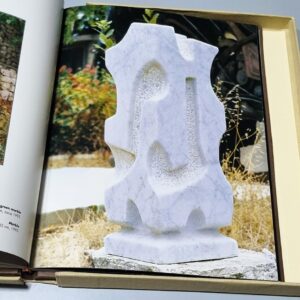
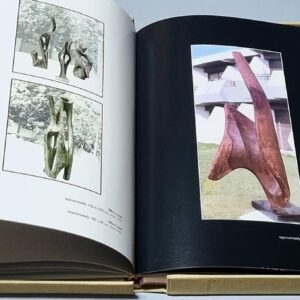
Joseph Basbous – Sculpture
$ 49.95
Joseph Basbous – Sculpture – Cesar Nammour

100% Made in Lebanon - صنع في لبنان
- Description
- Shipping & Return
Description
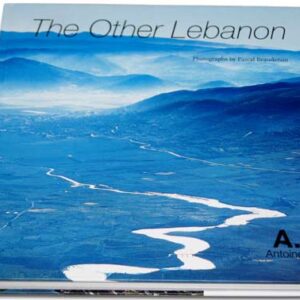
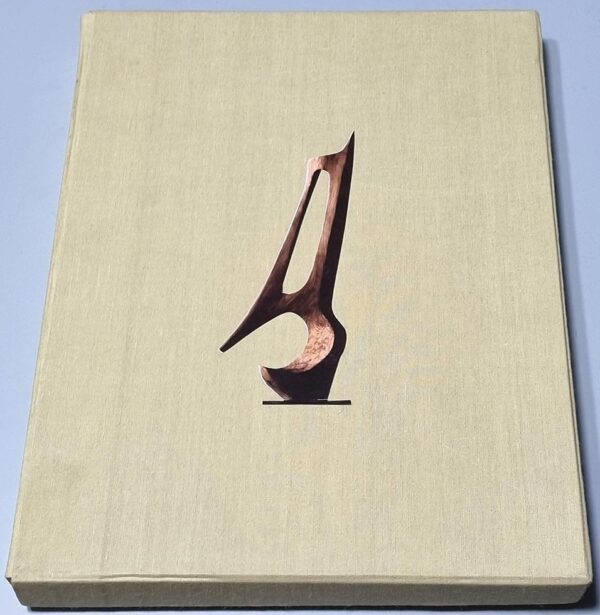
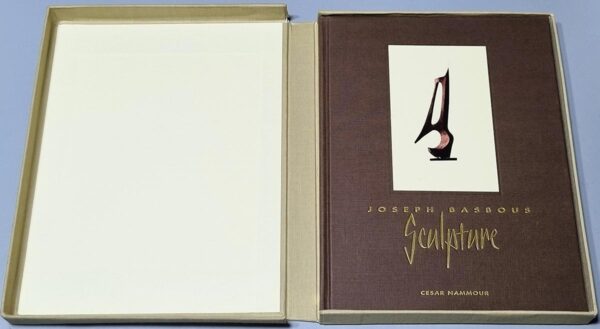
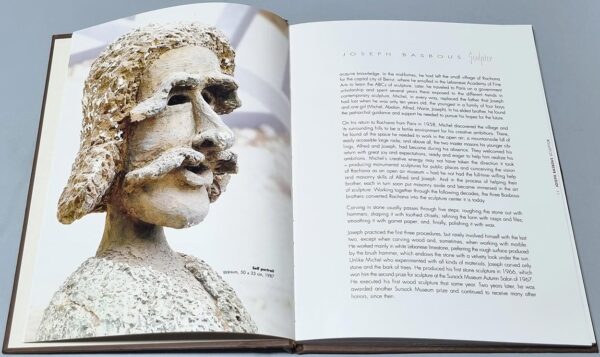
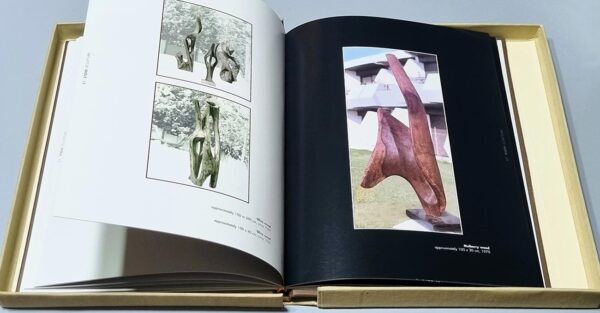
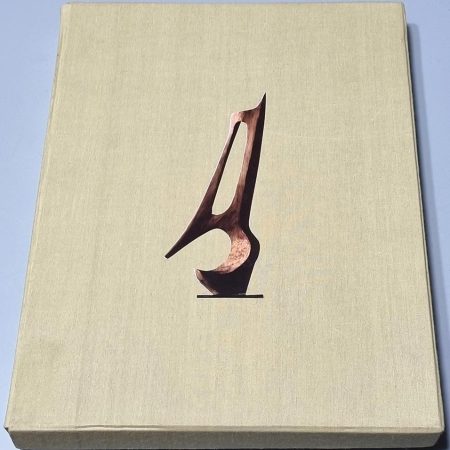
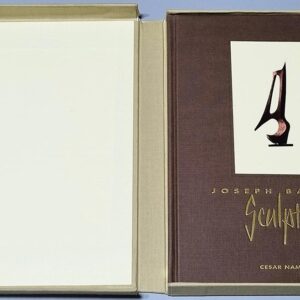
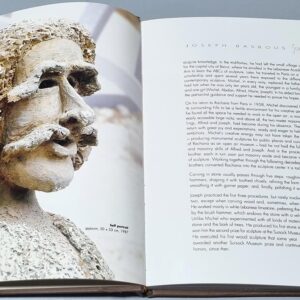
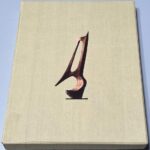
LebanonPostcard presents the book Joseph Basbous – Sculpture – Cesar Nammour – Fine arts Consulting and Publishing Beirut 2001
Hardcover book with box, 31×24 cm, 121 pages
The first encounter of man with stone, in the remote mountain villages in Lebanon, was when he built walls for terracing his land. The process was haphazard and did not require any particular talent or special tools. It was simply a matter of stacking field stones of different volumes and shapes, often as found in nature, one above the other and leaving space between them. Only when the rocks were big did the builder use a long-armed, heavy sledgehammer to break them into smaller sizes. Sometimes he used al-chakouf, a medium-weight hammer, to cut away unwanted parts of the stone.
To prepare stones for building mountain houses, he used the taksib – a hammer with one pointed and one flat side – to give the stones a slightly irregular textured surface. He also depended on the pick hammer, pointed on both sides, to better control the removal of large slices from the block and in texturing larger surfaces. In this texturing process, he also used the pick hammer at times instead of the toothed chisel and hammer. To create large smooth surfaces, however, he would use alchahouta – a brush hammer with a row of points – to obtain relatively smooth surfaces. And to give final shape to the stone, he used a small hammer and a variety of chisels – the pointed chisel, the flat chisel (large and small), the toothed chisel and the round chisel.
–
It is from this ancient background of stone masonry that the Basbous family of sculptors emerged in the early decades of the twentieth century. From their father, the Basbous boys inherited the desire to cut into stone and from him they acquired the skills of masonry while they were still children.
Joseph developed those skills to become a master mason. As a young man, he worked with his brothers to enlarge the family house, added a room for himself to marry and helped build the houses of Michel and Alfred in Rachana, as well as the sculptured house in the family courtyard. Through the years, as he acquired experience in carving all kinds of stone, his innate sensitivity to the aesthetic potential of stone developed. The credit for his transformation from being a traditional artisan mason to becoming a contemporary sculptor belongs to Michel, his eldest brother.
Michel was not just the eldest, the most adventurous and most ambitious of the brothers, he was also the most studious, the most curious and the most eager to acquire knowledge. In the mid-forties, he had left the small village of Rachana for the capital city of Beirut, where he enrolled in the Lebanese Academy of Fine Arts to learn the ABCs of sculpture. Later, he traveled to Paris on a government scholarship and spent several years there exposed to the different trends in contemporary sculpture. Michel, in every way, replaced the father that Joseph had lost when he was only ten years old, the youngest in a family of four boys and one girl (Michel, Abalan, Alfred, Marie, Joseph). In his eldest brother, he found the patriarchal guidance and support he needed to pursue his hopes for the future.
On his return to Rachana from Paris in 1958, Michel discovered the village and its surrounding hills to be a fertile environment for his creative ambitions. There, he found all the space he needed to work in the open air; a mountainside full of easily accessible large rocks; and above all, the two master masons his younger siblings, Alfred and Joseph, had become during his absence. They welcomed his return with great joy and expectations, ready and eager to help him realise his ambitions. Michel’s creative energy may not have taken the direction it took – producing monumental sculptures for public places and conceiving the vision of Rachana as an open-air museum – had he not had the full-time willing help and masonry skills of Alfred and Joseph. And in the process of helping their brother, each in turn soon put masonry aside and became immersed in the art of sculpture. Working together through the following decades, the three Basbous brothers converted Rachana into the sculpture center it is today.
Carving in stone usually passes through five steps: roughing the stone out with hammers; shaping it with toothed chisels; refining the form with rasps and files; smoothing it with garnet paper; and, finally, polishing it with wax.
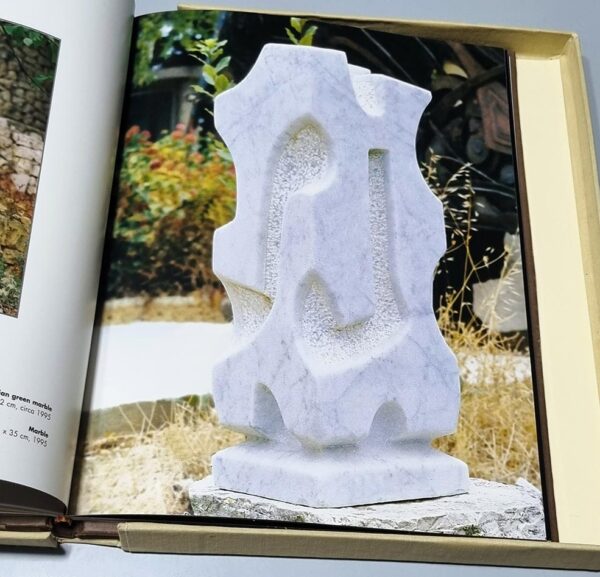
Joseph practised the first three procedures, but rarely involved himself with the last two, except when carving wood and, sometimes, when working with marble. He worked mainly in white Lebanese limestone, preferring the rough surface produced by the brush hammer, which endows the stone with a velvety look under the sun. Unlike Michel who experimented with all kinds of materials, Joseph carved only stone and the bark of trees. He produced his first stone sculpture in 1966, which won him the second prize for sculpture at the Sursock Museum Autumn Salon of 1967. He executed his first wood sculpture that same year. Two years later, he was awarded another Sursock Museum prize and continued to receive many other honors, since then.
LebanonPostcard will be responsible for sending the book you order, through a fast courier with a tracking number, guaranteeing reception of the package. The souvenirs may take three to five days to arrive, depending on the country to which they are sent.
a. View or Modify What is in Your Shopping Cart.
When in the Shopping Cart area of the site you can view or modify what is in your shopping cart at any time by clicking on the Add More Items/Refresh Totals button along the bottom of your screen.
b. Checking Out and pay for your purchases online.
When you have finished viewing and wish to end your shopping and pay for the items you have selected, click on the Pay & Finish button at the bottom of your screen.
You will be led through a series of secure ordering procedures and will be asked to fill in personal, shipping and payment option information. When this is completed, you will press the Submit Secure Checkout button and your order will be transmitted to LebanonPostcard for fulfillment.
Absolutely not! Right up until the point why you are asked to review the order information you have given us and if it is correct to click on the final Submit Secure Order button, you can abort the order.
If you don't press the Submit Secure Order button then no order information is transmitted to us.
a. Payment by Credit Card
We accept American Express, MasterCard, Visa, Discover, PayPal... etc... for online payments through 2CheckOut.com. Also, arrangements can be made for bank draft and certified check payments by regular post.
b. Payment by Bank Draft and Certified Check
If you would prefer to pay for your purchases by mail, then you have to contact us first so we can give you our account information.
c. We accept as well payment through WesternUnion, RIA, OMT, BOB Finance, Whish Money.
All prices include shipping and handling. LebanonPostcard will be responsible for sending the packages you order, at your charge, through the service D.H.L. / E.M.S. with tracking number code guaranteeing reception of the package.
We ship as soon as possible, but within maximum 4 days after the order is received.
Credit cards are not charged until we actually ship the items. The items may take between one and six days to arrive, according to the country they are sent to.
Packages are sent with track code to guarantee reception, and delay is rare. In the event of non-delivery or delay, nothing can be done for 7 days. At the end of this period, on our being informed, a demand will be made for the package to be traced. If 14 days after the first dispatch there is still no delivery, a second package will be sent free.
Packages inside Lebanon are sent registered through LibanPost to guarantee reception, and delay or non-delivery is rare. In the event of non-delivery, nothing can be done for 6 days. At the end of this period, on our being informed, a demand will be made to LibanPost for the package to be traced. If 12 days after the first dispatch there is still no delivery, a second package will be sent free.
We ship anywhere in the world. Zones and countries we ship to
Yes. You can cancel you order when you receive an email from us confirming your order, you can reply by canceling it.